For many organizations, Teams is not simply a video-call app. It is part of an existing identity, collaboration, and administration environment. That changes the translation decision. Before asking which product sounds more natural, ask whether the meeting must remain inside that environment and whether the people who need interpretation can actually use its native feature.
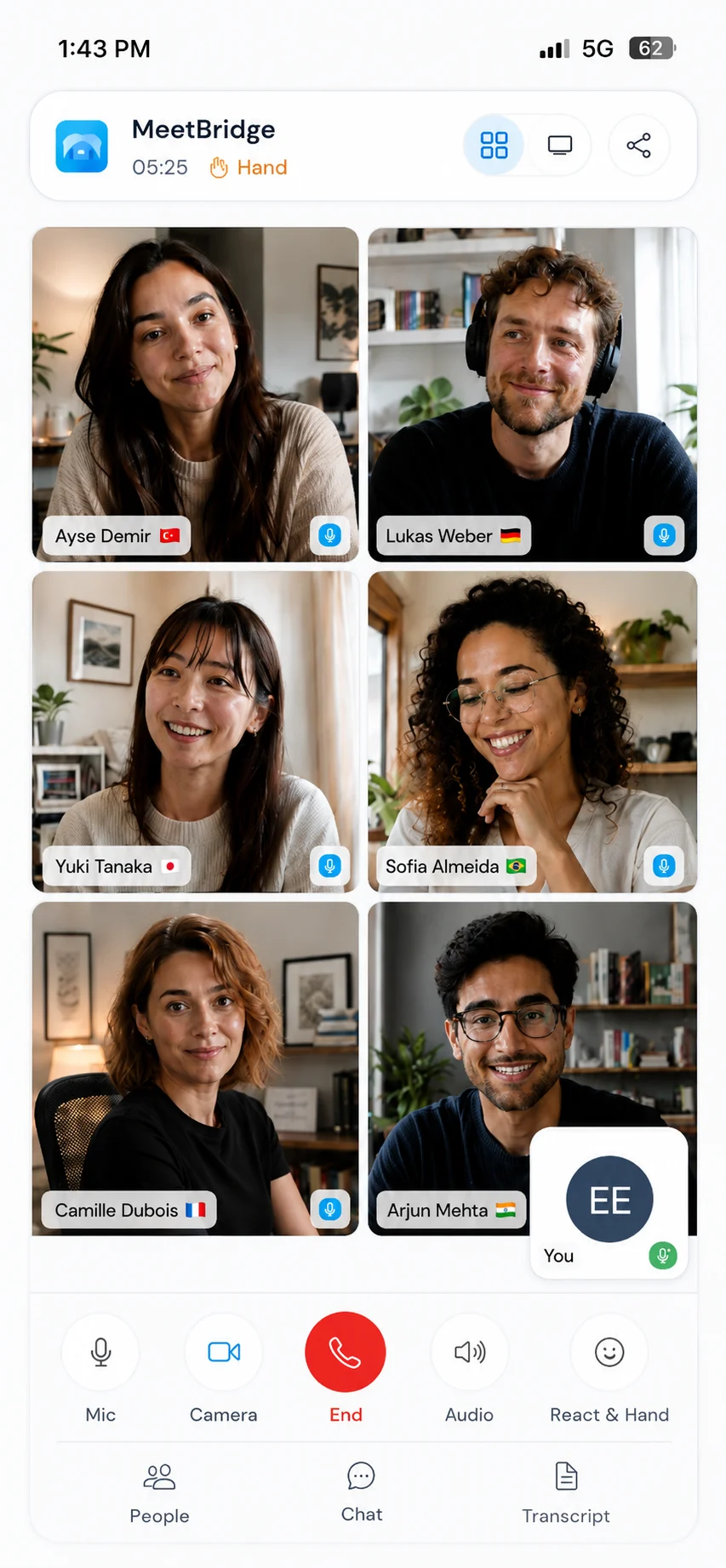
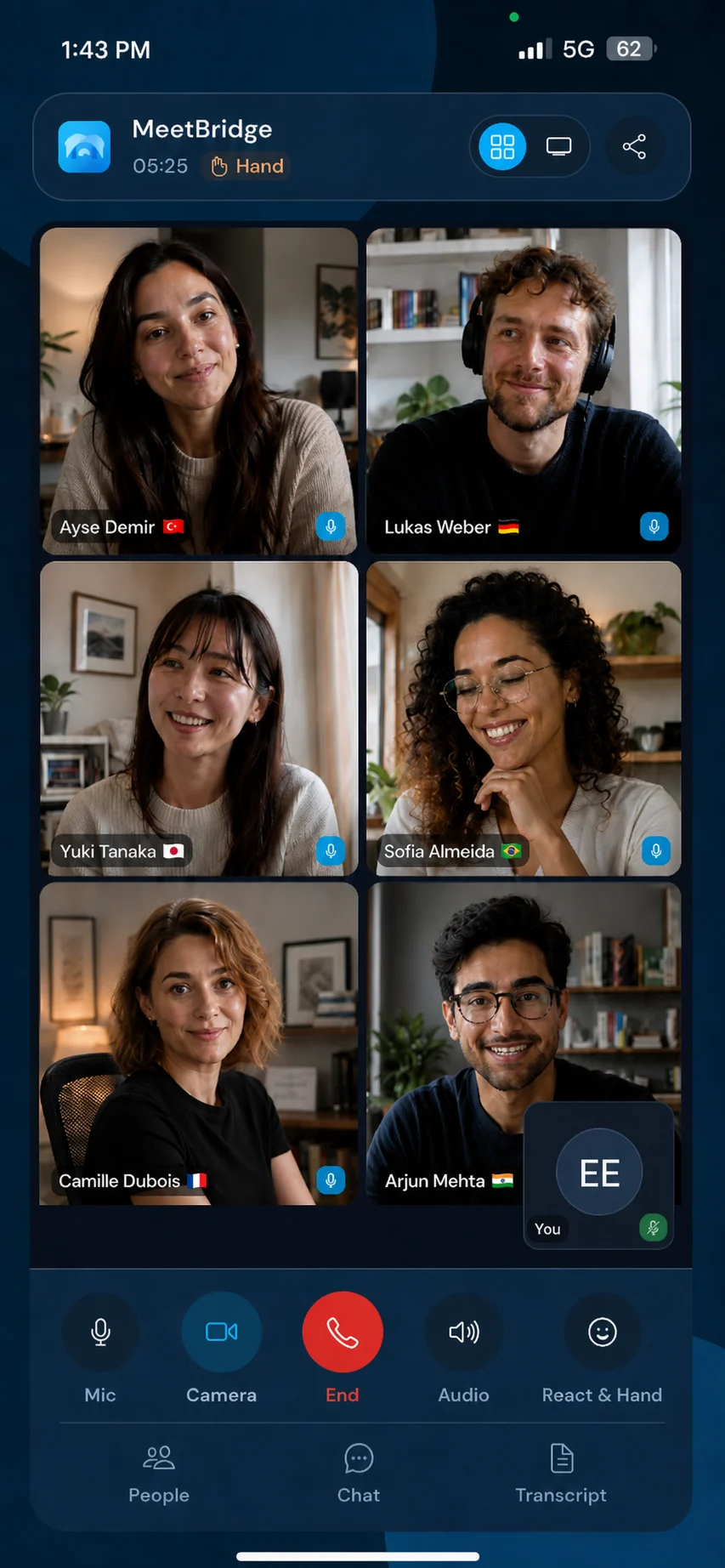
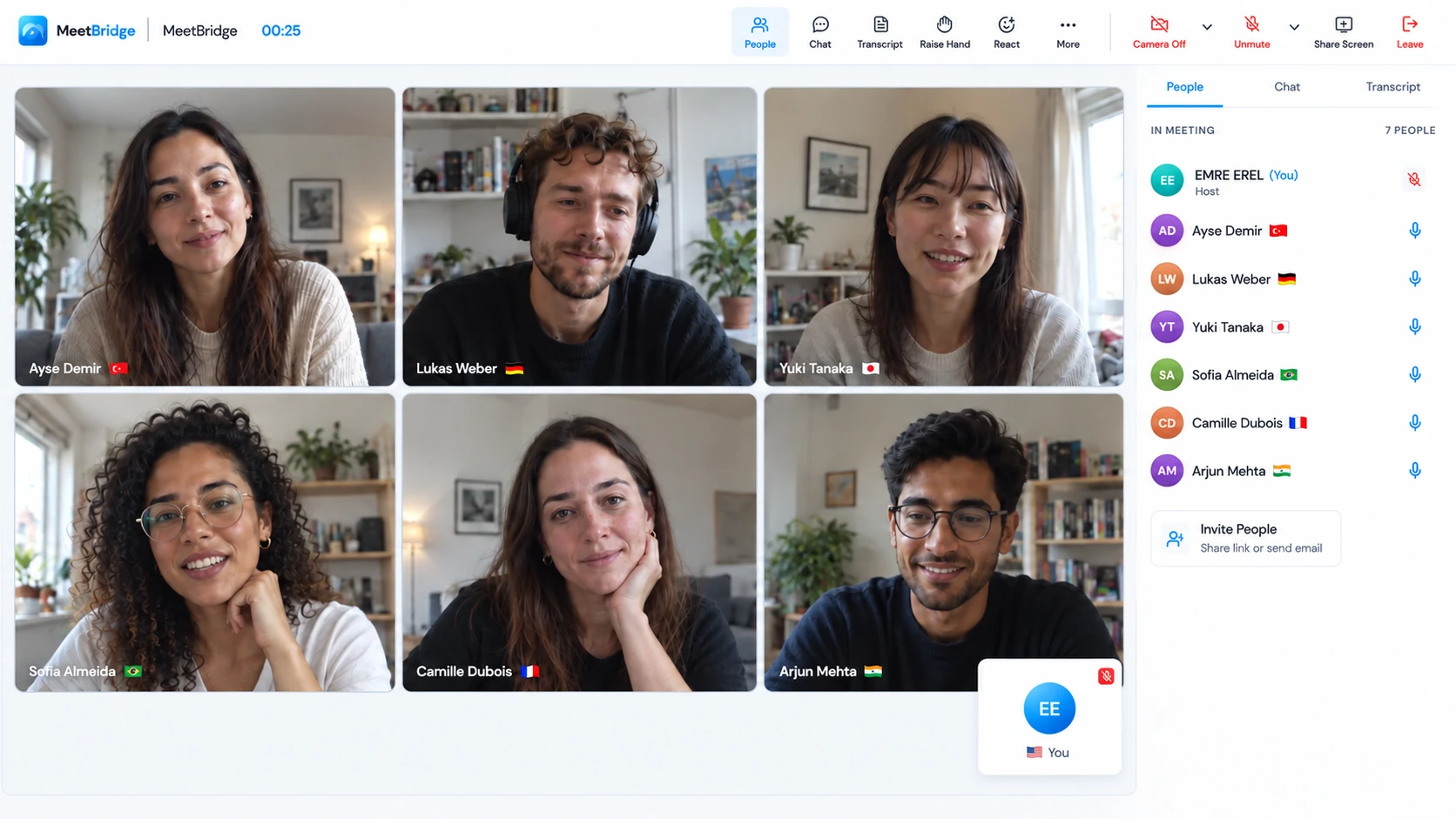
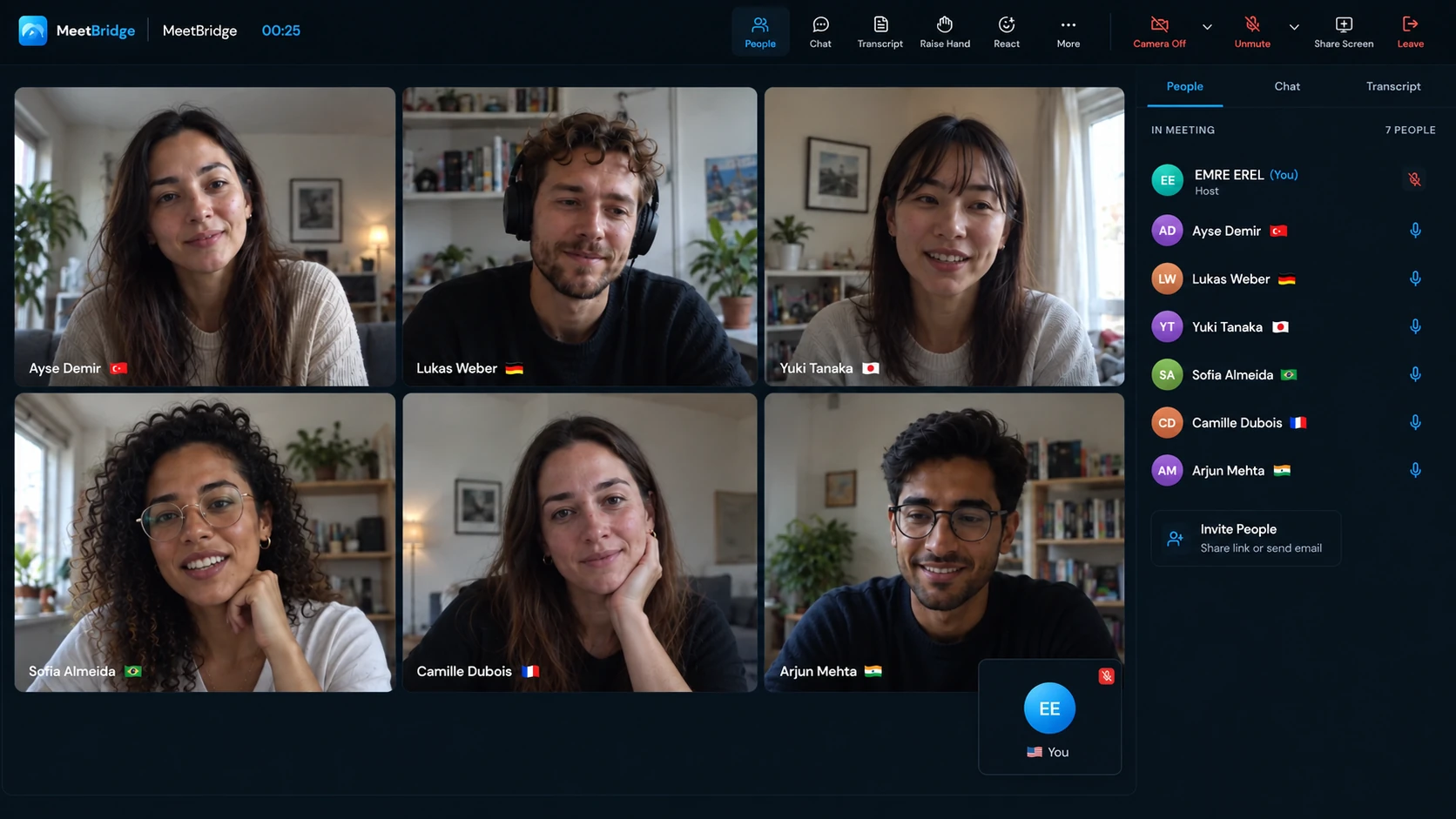
MeetBridge is a separate destination, not a replacement switch inside Teams. Its value proposition is to connect multilingual conversation with transcript context and follow-up in its own room. The comparison is therefore about two meeting approaches: add native interpretation to an eligible Teams meeting, or deliberately host the conversation in a dedicated MeetBridge workspace.
The candidate interview reveals a different set of requirements
Imagine an illustrative interview between a recruiter, a hiring manager, and a candidate who is more comfortable in another language. The invitation may look simple, but the evaluation should consider participant access, joining instructions, and what the hiring team will review later. A feature that works for licensed colleagues should not automatically be assumed to work identically for every external participant.
After the interview, the team may need the candidate’s exact answer, a summary for the hiring manager, and agreed next steps. These are distinct from live interpretation. Check the native feature’s transcript and recording boundaries, then compare the actual review workflow in MeetBridge. This example does not claim better hiring results or justify treating generated summaries as objective candidate assessments.
Evaluate the whole conversation, including the follow-up
Hearing translated speech and retaining a useful meeting record are different requirements. A sales team may need the objection, agreed amount, owner, and next step together after the call. An HR team may need to revisit an answer without relying on memory. Evaluate live audio, transcript access, summaries, and sharing as separate stages; do not assume that one translation feature automatically provides all of them. Transcripts and meeting memory
MeetBridge brings translated speech, live transcript context, summaries, decisions, and action items into its own meeting workflow. Participants join the MeetBridge room rather than remaining in the original platform call. Meeting summaries and actions
Workflow comparison at a glance
| Decision criterion | MeetBridge | Microsoft Teams Interpreter |
|---|---|---|
| Where the conversation happens | A separate MeetBridge meeting room; not an in-call platform extension. | Inside supported Teams meetings with the native Interpreter agent. [1] |
| How participants follow speech | Translated audio and live transcript context in the MeetBridge room. | Speech-to-speech interpretation with automated or simulated voice options, subject to administrator policy. [1] |
| Access and setup | Share the MeetBridge invitation, choose participant languages, and check devices before the call. See current plans. Pricing | Microsoft documents eligible Microsoft 365 and Teams licenses plus Microsoft Copilot. Confirm participant eligibility and organization settings with your administrator. [1] |
| After-meeting workflow | Connected transcript, meeting summaries, decisions, and action items; review important details before sharing. | Microsoft notes that recordings capture original audio, not interpreted audio; translated transcripts are live-only, with the original spoken language retained afterward. [2] |
Choose the native option when the meeting must stay on the platform
If your organization requires the existing meeting venue, first evaluate its native translation feature, eligible licenses, supported languages, and participant access. MeetBridge does not add translation inside that call. Microsoft Teams Interpreter
Speech-to-speech interpretation with automated or simulated voice options, subject to administrator policy. [1]
Microsoft documents eligible Microsoft 365 and Teams licenses plus Microsoft Copilot. Confirm participant eligibility and organization settings with your administrator. [1]
Microsoft notes that recordings capture original audio, not interpreted audio; translated transcripts are live-only, with the original spoken language retained afterward. [2]
Test real language pairs and business terminology
Use a short representative meeting rather than a polished demo alone. Include names, dates, numbers, specialist vocabulary, and a moment when speakers interrupt each other. Listen to translated audio and review the transcript independently. We have not published a controlled head-to-head accuracy or latency benchmark, so this comparison does not claim that MeetBridge is faster or more accurate than either native feature. Live translation
Before you choose: a practical evaluation checklist
- Confirm whether the meeting can move to another room.
- Verify the exact spoken and listening languages, not the website locale count.
- Check participant identity, licenses, devices, and administrator settings.
- Run a realistic audio test with your business terminology.
- Review the transcript and follow-up outputs, then check consent and access policies.
Make consent and review part of the workflow
Tell participants about transcription and generated speech before starting. Check organizational policies, access permissions, and retention requirements for the selected product. Translation and summaries can contain errors; confirm contractual amounts, interview judgments, and sensitive decisions with the people involved. A healthcare, legal, or regulated discussion may require qualified human interpretation rather than relying on automated translation alone. Meeting voice processing
Keep policy, participation, and meeting memory in the same decision
If a Teams-only policy is non-negotiable and participant eligibility fits, begin with the native Interpreter path and your administrator’s requirements. If the meeting venue is flexible, evaluate MeetBridge with the people who will actually join—not just an internal account that already has every license.
The deciding question is not whether a translation demo sounds impressive. It is whether the chosen room supports a clear conversation and a reviewable handoff without creating access or policy confusion. Trial a representative meeting, confirm the important facts afterward, and choose based on that complete experience.
Questions before switching
Does MeetBridge translate an existing platform call in place?
No. Participants join a separate MeetBridge room. It is not a native add-on, bot, or plug-in for the compared platform.
Are the 11 website languages the supported speech-language list?
No. Website localization and speech-language availability are different. Verify your actual speaking and listening language pair in the product before the meeting.
Which workflow should we pilot first?
Pilot a low-risk meeting with representative participants, devices, and terminology. Check translated audio, transcript context, and follow-up review before using the workflow for consequential decisions.