The invitation is already in the calendar, the customer knows Zoom, and the demo starts in ten minutes. Then someone asks a simple question: can we hold this conversation in our own languages? At that moment, the useful comparison is not between two lists of translation features. It is between keeping the meeting where it is and choosing a room built around the multilingual conversation.
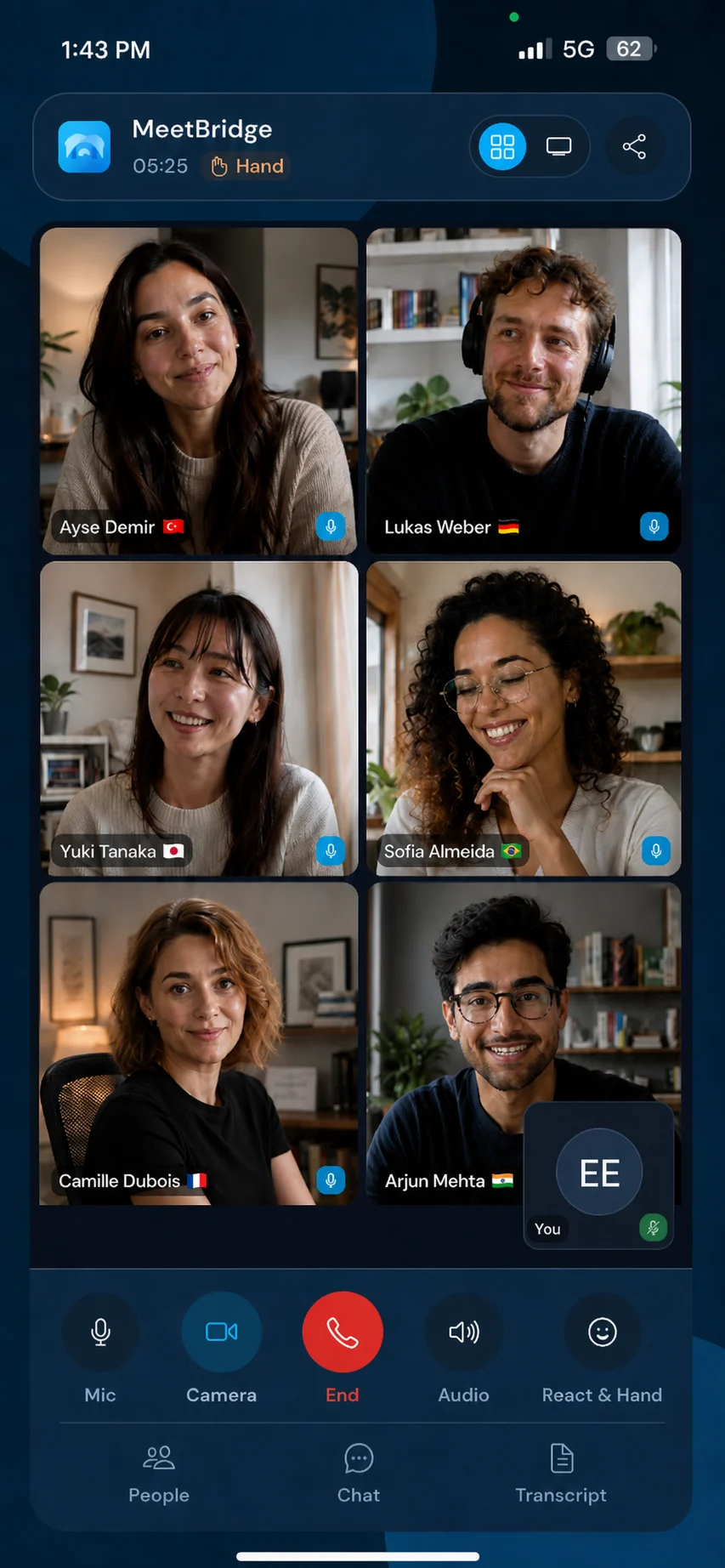
Zoom Voice Translator addresses translation inside a Zoom meeting. MeetBridge takes a different route: the conversation happens in a separate MeetBridge room, with translated audio and transcript context connected to the meeting record. That difference matters more than a generic claim that one tool is “better.” If moving the room is impossible, MeetBridge is not an invisible translation layer for the existing Zoom call.
Choose the native option when the meeting must stay on the platform
If your organization requires the existing meeting venue, first evaluate its native translation feature, eligible licenses, supported languages, and participant access. MeetBridge does not add translation inside that call. Zoom Voice Translator
Synthetic translated speech; long continuous speech is played after a pause. Check supported language pairs. [1]
Zoom lists a Live Translation add-on or ZoomMate, an enabled feature, and Windows/macOS desktop app 7.0.0 or later as requirements. [1]
Workflow comparison at a glance
| Decision criterion | MeetBridge | Zoom Voice Translator |
|---|---|---|
| Where the conversation happens | A separate MeetBridge meeting room; not an in-call platform extension. | Inside a Zoom meeting with the native Voice Translator feature. [1] |
| How participants follow speech | Translated audio and live transcript context in the MeetBridge room. | Synthetic translated speech; long continuous speech is played after a pause. Check supported language pairs. [1] |
| Access and setup | Share the MeetBridge invitation, choose participant languages, and check devices before the call. See current plans. Pricing | Zoom lists a Live Translation add-on or ZoomMate, an enabled feature, and Windows/macOS desktop app 7.0.0 or later as requirements. [1] |
| After-meeting workflow | Connected transcript, meeting summaries, decisions, and action items; review important details before sharing. | Evaluate recording, transcript, and follow-up requirements separately. Do not treat the voice feature alone as an end-to-end meeting-record solution. |
A sales demo does not end when everyone leaves the call
Consider an illustrative product demo with a seller, a customer, and a technical colleague who do not all share the same strongest language. During the call, hearing the explanation is only one part of the task. Someone also needs to retain the customer’s concern, distinguish a proposed price from an agreed amount, and remember who promised the next document. This is a workflow example, not a measured customer success story.
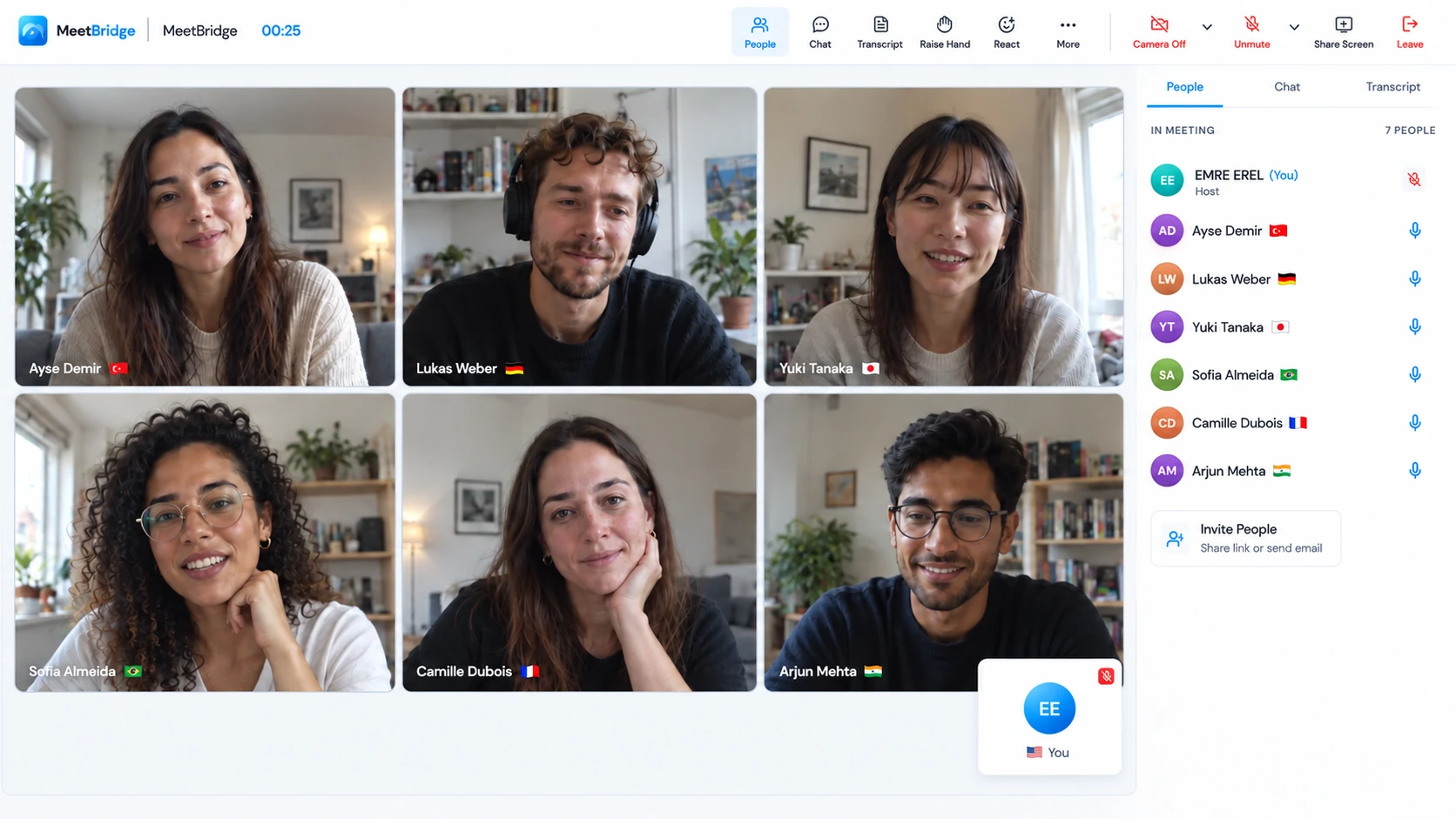
A useful evaluation therefore follows the conversation beyond the audio. Can the team revisit the transcript, review a summary, confirm a decision, and hand the next step to its owner? MeetBridge connects these stages in its own workspace. A Zoom-based team should evaluate the relevant Zoom recording and notes workflow separately rather than assume that enabling Voice Translator alone solves every follow-up requirement.
Evaluate the whole conversation, including the follow-up
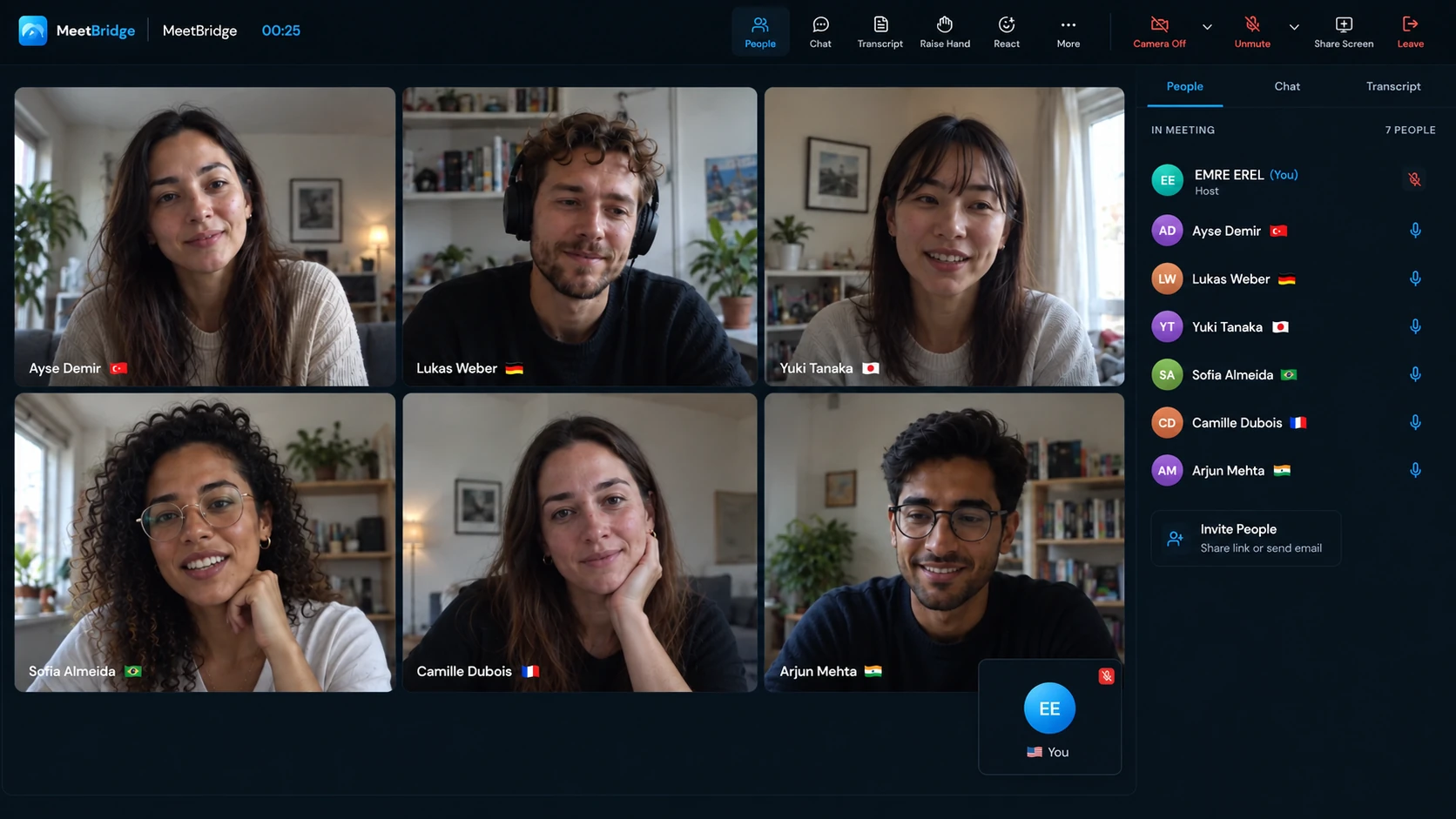
Hearing translated speech and retaining a useful meeting record are different requirements. A sales team may need the objection, agreed amount, owner, and next step together after the call. An HR team may need to revisit an answer without relying on memory. Evaluate live audio, transcript access, summaries, and sharing as separate stages; do not assume that one translation feature automatically provides all of them. Transcripts and meeting memory
MeetBridge brings translated speech, live transcript context, summaries, decisions, and action items into its own meeting workflow. Participants join the MeetBridge room rather than remaining in the original platform call. Meeting summaries and actions
Test real language pairs and business terminology
Use a short representative meeting rather than a polished demo alone. Include names, dates, numbers, specialist vocabulary, and a moment when speakers interrupt each other. Listen to translated audio and review the transcript independently. We have not published a controlled head-to-head accuracy or latency benchmark, so this comparison does not claim that MeetBridge is faster or more accurate than either native feature. Live translation
Before you choose: a practical evaluation checklist
- Confirm whether the meeting can move to another room.
- Verify the exact spoken and listening languages, not the website locale count.
- Check participant identity, licenses, devices, and administrator settings.
- Run a realistic audio test with your business terminology.
- Review the transcript and follow-up outputs, then check consent and access policies.
Make consent and review part of the workflow
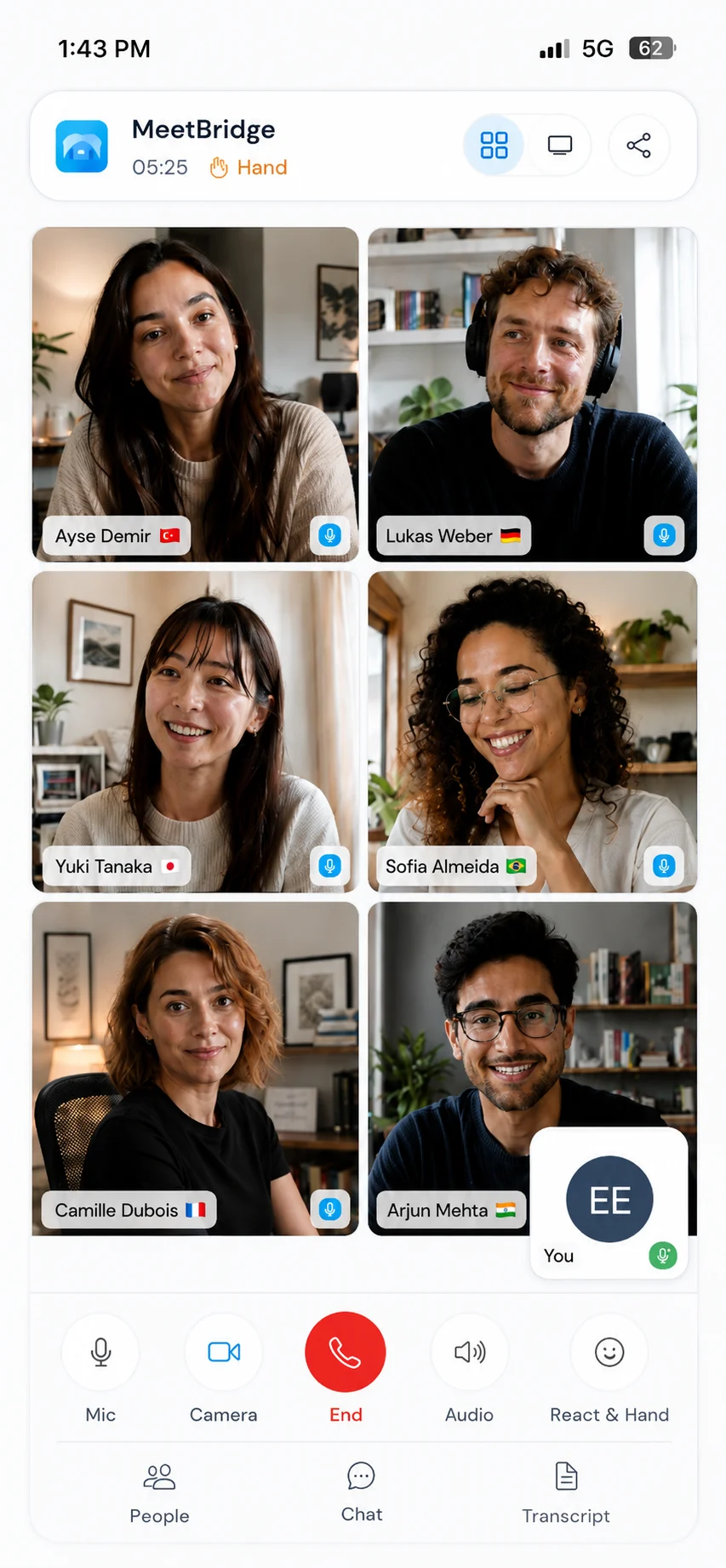
Tell participants about transcription and generated speech before starting. Check organizational policies, access permissions, and retention requirements for the selected product. Translation and summaries can contain errors; confirm contractual amounts, interview judgments, and sensitive decisions with the people involved. A healthcare, legal, or regulated discussion may require qualified human interpretation rather than relying on automated translation alone. Meeting voice processing
The choice is about the meeting you want to run
For a team that must keep its Zoom venue, the native translation feature is the more directly aligned place to start, provided the required languages, licenses, and devices fit. For a team that can move a multilingual customer conversation into another room, MeetBridge deserves evaluation as a connected meeting workflow, not as a Zoom add-on.
Do not decide from an attractive screenshot or a long feature list alone. Send a test invitation, let the actual participants join, use a real business topic, and inspect what remains afterward. The strongest choice is the one your team can use clearly and responsibly from invitation to follow-up—not the one with the loudest accuracy claim.
Questions before switching
Does MeetBridge translate an existing platform call in place?
No. Participants join a separate MeetBridge room. It is not a native add-on, bot, or plug-in for the compared platform.
Are the 11 website languages the supported speech-language list?
No. Website localization and speech-language availability are different. Verify your actual speaking and listening language pair in the product before the meeting.
Which workflow should we pilot first?
Pilot a low-risk meeting with representative participants, devices, and terminology. Check translated audio, transcript context, and follow-up review before using the workflow for consequential decisions.